

Introduction
Genetic analysis is rapidly becoming an essential tool in fields like healthcare, research, and forensics. However, traditional processes are often slow, labor-intensive, and prone to error. Automation is transforming this landscape that by streamlining workflows, enhancing accuracy and saving valuable time. This article explores how automation technology is being applied to genetic identity and analysis systems.
What is Genetic Testing Automation?
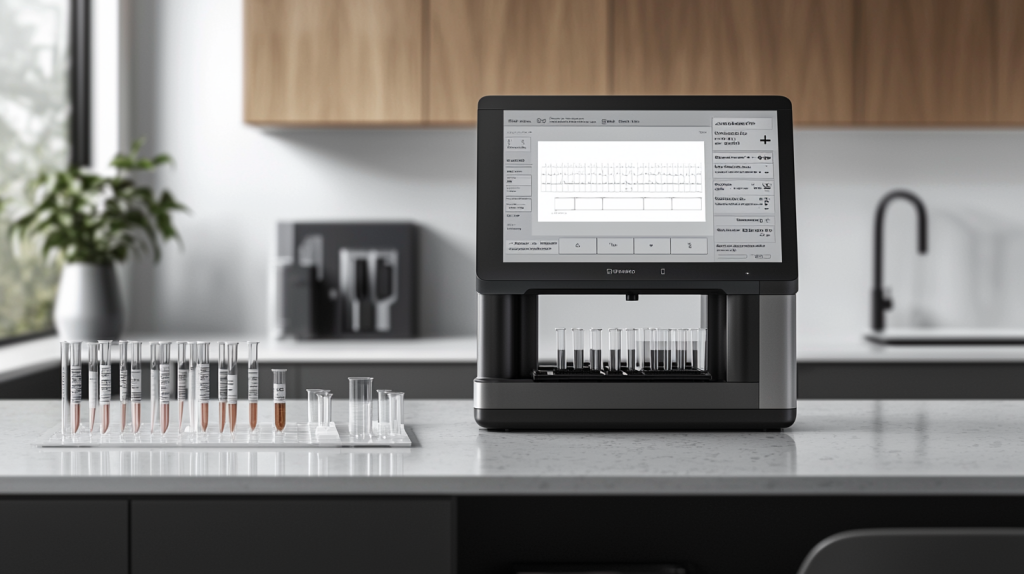
Genetic test automation harnesses advanced technologies to optimize and streamline genetic testing workflows. Solutions like omnomicsQ and omnomicsV exemplify this innovation by automating critical steps – from sample tracking to data analysis. These systems integrate seamlessly into laboratory settings, minimising manual intervention and improving operational efficiency. By taking over repetitive error-prone tasks, automation enables more reliable genetic analyses, enabling laboratories to process larger volumes of data with greater consistency.
Additionally, automated genetic testing improves access to complex insights by streamlining the interpretation process. These systems can efficiently analyze vast datasets to identify patterns or anomalies that might otherwise go unnoticed. This capability is particularly valuable in modern genetic analysis, where large-scale data handling has become the standard. Beyond accelerating workflows, automation also strengthens reproducibility which is essential for maintaining scientific accuracy.

Importance of Automation in Genetic Analysis
Automation is reshaping genetic analysis by ensuring processes are more consistent and efficient. One of its key contributions is improving quality control through automated validation and monitoring systems. These systems follow strict standards, such as ISO 13485 compliance, to reduce the risk of errors during testing. By automating critical validation steps, you can ensure consistent and reliable outcomes in genetic analysis, even when handling large-scale or complex datasets. This level of precision is important for maintaining trust in genetic testing results and meeting industry expectations for quality assurance.
Another significant impact of automation is its role in advancing personalized medicine. The rising demand for individualized treatment plans relies heavily on precise genomic analysis. Automation enables faster and more accurate processing of genetic data, ensuring actionable insights can be derived more efficiently. This capability directly supports the development of customized therapies tailored to a patient’s unique genetic profile, bridging the gap between genetic research and clinical application.
Key Applications of Genetic Testing Automation
1. Accelerating Disease Diagnosis and Prediction
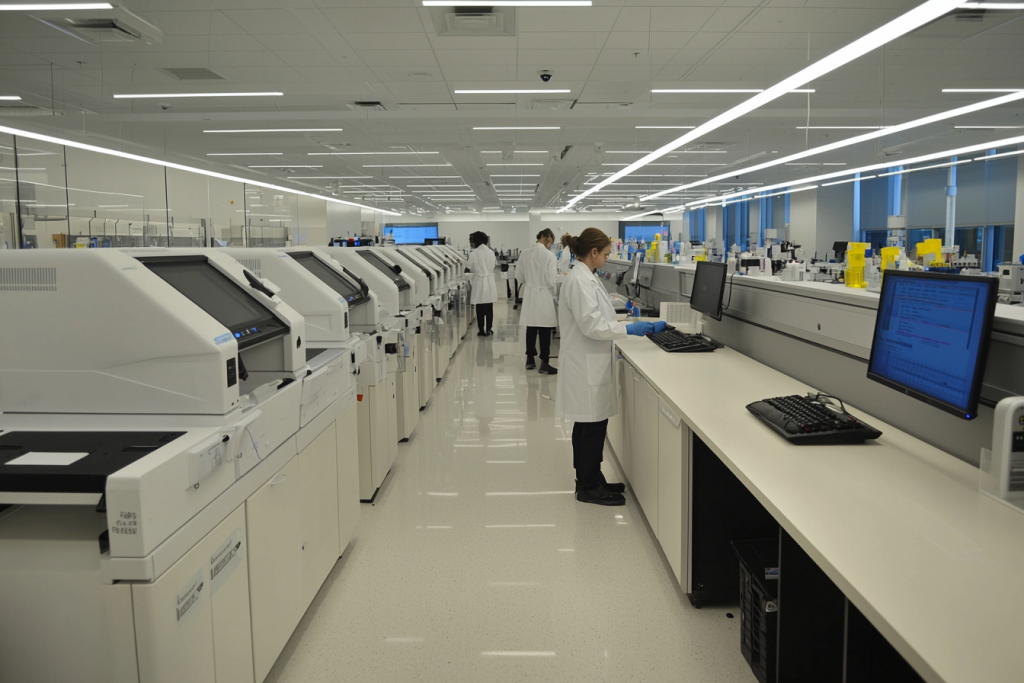
Genetic test automation has revolutionized how clinicians diagnose and manage diseases by making testing faster, more accurate, and more scalable. By rapidly processing large volumes of genetic data, automation enhances both disease diagnosis and risk prediction. In rare disease detection, many disorders result from mutations in a single gene, and automated pipelines can quickly analyze whole-exome or whole-genome data to identify pathogenic variants, significantly shortening the “diagnostic odyssey” that often spans years.
Automation also extends beyond diagnosis, enabling tailored treatment and even predicting disease risk before symptoms appear. Automated analysis of polygenic risk scores (PRS) combines information from thousands of genetic markers to estimate an individual’s predisposition to conditions such as cardiovascular disease, type 2 diabetes, or Alzheimer’s, facilitating earlier interventions. Beyond treatment, automated interpretation of genetic data can guide lifestyle optimization, highlighting predispositions related to diet, exercise response, or circadian rhythms and supporting personalized lifestyle recommendations. At the population level, automation enables preventive screening programs by stratifying individuals based on genetic risk, helping healthcare systems allocate resources more effectively and deliver proactive, data-driven care.
2. Advancing Personalized medicine
Genetic testing is redefining personalized medicine by enabling faster, more accurate, and highly scalable analysis of complex genomic data. A major application is in tumor profiling, the process of analyzing a cancer’s genetic makeup to identify mutations that drive its growth. Automation enhances this by detecting somatic mutations, copy number variations, and gene fusions with high precision, helping physicians choose therapies designed to target those specific changes. For example, identifying BRCA1/2 mutations can inform the use of PARP inhibitors in breast and ovarian cancers, while detecting EGFR mutations supports the use of specialized therapies in lung cancer.
Another critical area is pharmacogenomics, the study of how genes affect an individual’s response to medications. Automated analysis of genetic variants in drug-metabolizing enzymes, such as those in the CYP450 family, helps physicians tailor drug type and dosage to each patient, reducing trial-and-error prescribing and minimizing adverse drug reactions. By combining tumor profiling with pharmacogenomic insights, automated genetic testing not only accelerates the discovery of clinically relevant variants but also integrates treatment guidance directly into patient care. This dual impact enhances precision, efficiency, and personalization across the healthcare system, making genetic insights more practical and accessible for everyday clinical decision-making.
3. Reproductive & Prenatal Testing
In reproductive medicine, speed and accuracy are critical, and genetic testing provides powerful tools that directly influence clinical decisions. In preimplantation genetic testing (PGT), embryos can be screened for chromosomal abnormalities or specific genetic disorders before IVF implantation, lowering the risk of passing on inherited conditions. Similarly, non-invasive prenatal testing (NIPT) analyzes cell-free fetal DNA in maternal blood to detect chromosomal abnormalities such as Down, Edwards, or Patau syndromes with high sensitivity and minimal risk. Beyond pregnancy, both carrier screening and newborn screening benefit from large-scale genetic assays: prospective parents can be tested for recessive conditions, while newborns can be screened for hundreds of disorders. Early detection of these conditions allows for timely interventions that significantly improve long-term outcomes. Together, these approaches enhance family planning, prenatal care, and early-life health management.
4. Expanding Frontiers in Genomic Research
In research, genetic testing technologies have become indispensable for exploring the complexity of genomes at scale. In the laboratory, high-throughput sequencing platforms, robotic liquid handlers, and automated sample preparation systems reduce human error and accelerate experiments that once took months to complete. On the computational side, automated bioinformatics pipelines manage raw sequencing data, align genomes, identify variants, and integrate multiple data layers—including transcriptomics, epigenomics, and proteomics—without constant manual oversight. This streamlines discovery while improving reproducibility, a long-standing challenge in genomics. Functional genomics also benefits, with streamlined workflows for CRISPR-based screening, single-cell sequencing, and gene expression profiling, helping researchers uncover gene functions and disease mechanisms. In population genomics, large-scale analysis of data from thousands or millions of individuals supports genome-wide association studies (GWAS), variant frequency mapping, and ancestry research, revealing insights into human evolution, population structure, and complex disease risks. By integrating robotics, machine learning, and cloud computing, genomic research is shifting into a new era of speed, scale, and precision, fueling breakthroughs across biology, medicine, and public health.
Core Technologies Driving Gene Test Automation
1. Role of Automated Systems in Monitoring Genomic Samples
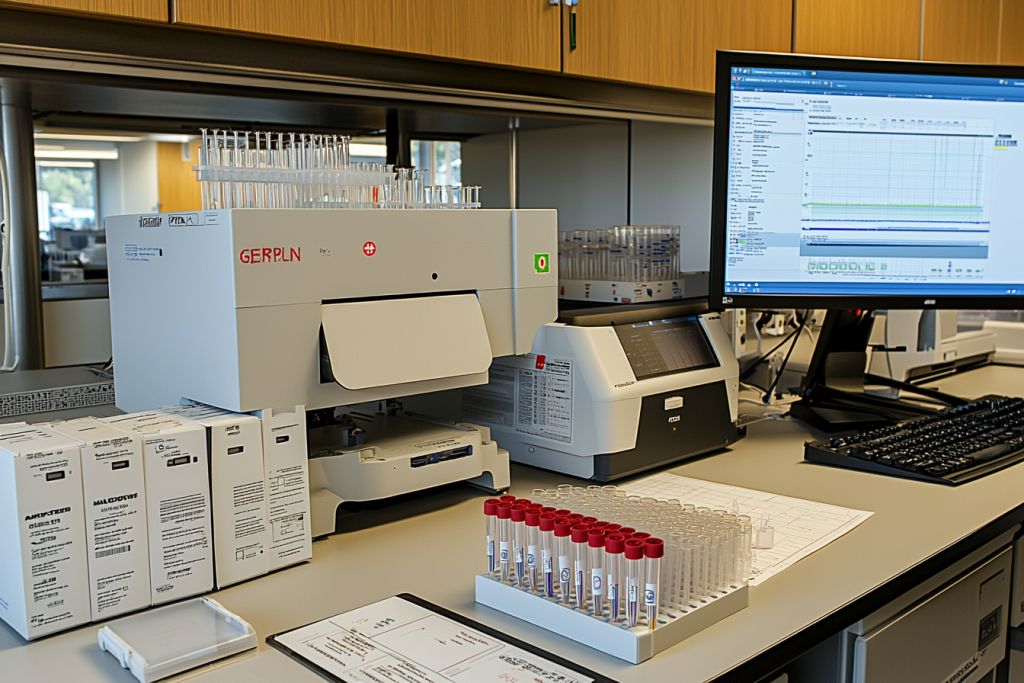
Automated systems play a critical role in maintaining the precision and consistency of genomic sample monitoring. These platforms continuously flag samples that fail to meet pre-defined quality thresholds, ensuring that only high-quality data moves forward in the testing process.
- By reducing human errors, such as mislabeling or sample mix-ups, these systems standardize workflows and significantly enhance reliability in high-throughput environments.
- Real-time quality checks ensure that issues like degraded samples or temperature fluctuations are identified early, preventing downstream inaccuracies in genetic analysis.
- Automation also provides enhanced traceability through digital records and barcoding, creating a transparent chain of custody for each sample. This traceability is crucial for audits and compliance with regulatory standards, including ISO 13485 and IVDR.
Incorporating such systems not only boosts efficiency but also ensures compliance and consistency, laying a robust foundation for accurate genomic testing.
2. Integration of High-Throughput Sequencing with Automation
High-throughput sequencing (HTS), when paired with automation, has revolutionized genetic analysis by enabling the rapid sequencing of vast amounts of DNA. Automation enhances this process by streamlining tasks like sample preparation, sequencing, and data analysis.
- Scalability and Efficiency: Automated platforms can handle hundreds or thousands of samples simultaneously, making them indispensable for population-scale studies and clinical diagnostics.
- Reduced Variability: Robotic systems manage repetitive tasks, such as pipetting and library preparation, with precision, ensuring consistency across experiments. This standardization minimizes human variability and strengthens reproducibility.
- Data Analysis: Automated bioinformatics pipelines align sequences, identify variants, and generate insights far more efficiently than manual methods. This reduces processing times while maintaining high data accuracy.
By combining HTS with automated systems, laboratories can meet growing demands for genetic testing with faster turnaround times and improved reliability. These advantages are critical for advancing research and clinical applications, especially in environments requiring high throughput and precision.
3. AI and Machine Learning in Genetic Data Interpretation
Artificial intelligence (AI) and machine learning (ML) are transforming genetic data interpretation by analyzing vast datasets with unparalleled speed and accuracy.
- Variant Classification: AI enhances the identification of genetic variants by analyzing patterns across extensive datasets, reducing false positives and negatives. This is especially critical in clinical applications, where precision is vital for patient outcomes.
- Data Integration: AI bridges diverse data sources, harmonizing inputs from sequencing platforms and annotation databases such as ClinVar, CIViC etc. This unified approach enables researchers and clinicians to derive more comprehensive insights into genetic data.
These technologies, when integrated into workflows, enhance efficiency, data accuracy, and research outcomes. Tools like omnomicsQ monitor quality in real time, while validation systems such as omnomicsV maintain high sensitivity and specificity. Streamlined processes—from sample preparation to data analysis—shorten turnaround times, boost lab productivity, and support faster clinical decision-making. Automation also safeguards data and ensures compliance with GDPR, HIPAA, IVDR, and ISO 13485 through encryption, access controls, audit trails, and detailed documentation. Together, these capabilities make genetic testing more precise, efficient, and trustworthy, benefiting both patient care and research.
Quality Assurance and Standardization in Genetic Testing
1. Participation in External Quality Assessment (EQA) Programs
External Quality Assessment (EQA) programs play a critical role in maintaining high standards in automated genetic testing. These programs, such as the European Molecular Genetics Quality Network (EMQN) and Genomics Quality Assessment (GenQA), are designed to promote cross-laboratory standardization and improve the accuracy of results. By participating in EQA programs, laboratories can compare their performance against standardized benchmarks, identify discrepancies, and make necessary adjustments to ensure consistent quality across different testing platforms.
EQA programs also support collaboration and knowledge sharing among laboratories. By requiring participants to regularly submit genetic testing results for evaluation, these programs create opportunities to align methodologies and address inconsistencies. This process fosters a culture of continuous improvement and helps labs stay updated with advancements in genetic testing technologies.
2. Benchmarking and Inter-Laboratory Comparisons for Performance Monitoring
Benchmarking and inter-laboratory comparisons are integral to performance monitoring in genetic testing. Participation in EQA programs, such as EMQN and GenQA, provides a framework for evaluating laboratory processes and aligning them with international standards.
- Performance Evaluation: By benchmarking against peers and adhering to guidelines like those from ACMG and CAP, labs can identify gaps and optimize workflows.
- Collaborative Improvement: Inter-laboratory comparisons through EQA foster knowledge sharing and help labs refine methodologies to ensure consistent and accurate results.
Challenges in Implementing Gene Test Automation
1. Technical and Infrastructure Barriers
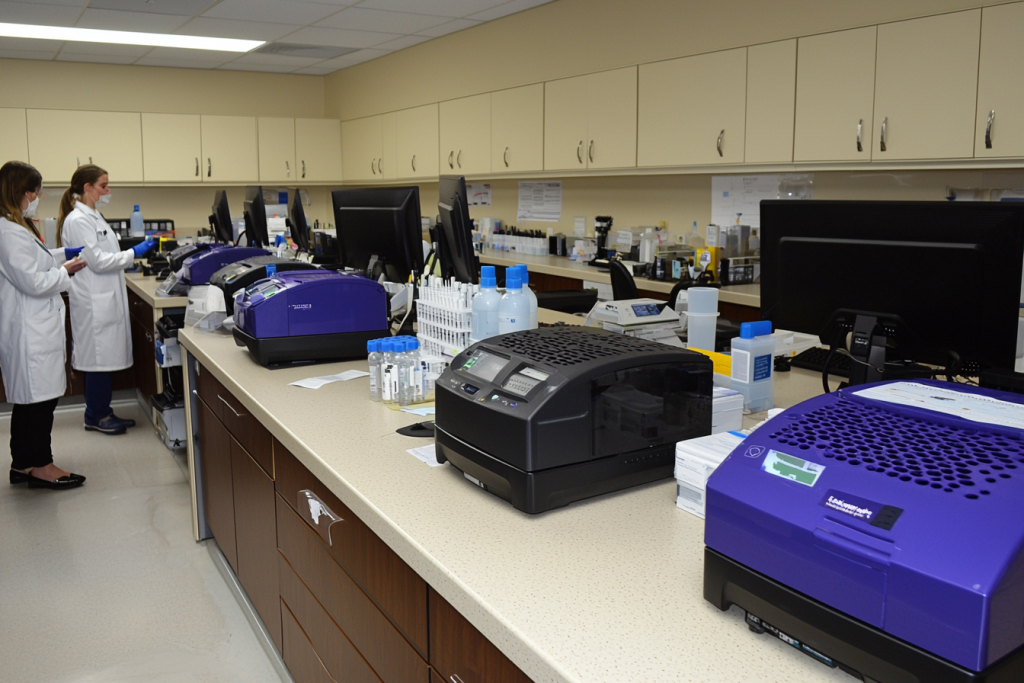
Integrating automated systems into genetic testing laboratories poses significant technical and infrastructural challenges. Establishing a fully automated environment requires substantial investments in advanced robotics, high-capacity servers, and specialized software capable of managing large and complex genomic datasets. Without these foundational elements, automation efforts can encounter workflow bottlenecks that limit efficiency and scalability.
Skill Gaps: Effective use of advanced tools such as omnomicsV and omnomicsQ demands specialized training to ensure laboratory staff can operate new systems confidently and resolve technical issues as they arise. To overcome these challenges, laboratories should prioritize infrastructure modernization and structured training programs to ensure smooth integration of automation into existing workflows.
2. Data Security and Privacy Concerns in Genomics
As automation increases the volume and speed of genetic testing, it also increases the importance of robust data security and privacy measures. Genetic information is uniquely identifiable and highly sensitive, requiring stringent protection to prevent unauthorized access or misuse. Compliance with frameworks such as GDPR and HIPAA is essential, as these regulations emphasize data minimization, consent-based use, encryption, and controlled access.
Tools like omnomicsNGS, which are designed in alignment with these standards, strengthen data protection by incorporating encryption, secure data storage, and detailed audit trails. These measures not only safeguard patient privacy but also build trust in automated genomic workflows and ensure ongoing regulatory compliance.
3. Ethical Considerations in Automated Genetic Testing
Automation introduces critical ethical considerations in genetic testing, including informed consent, data use, and equitable access.
- Informed Consent: As automated systems handle vast amounts of genetic data, individuals must fully understand how their information is used, stored, and shared. Transparent processes are essential to ensure consent remains meaningful and not merely procedural.
- Data Protection: Safeguards must prevent genetic discrimination or misuse of sensitive data, ensuring ethical handling in compliance with GDPR and HIPAA.
- Equitable Access: Automation can reduce costs and increase efficiency, but low-resource settings often lack access to these advancements. Addressing this disparity requires deliberate strategies to make genetic testing technologies accessible globally.
Conclusion
Genetic test automation is redefining genetic analysis by combining efficiency with precision. It bridges technology and biology to accelerate discoveries, improve patient outcomes, and set new standards in diagnostics. While challenges remain, its transformative potential outweighs the challenges. Embracing automation in genetic testing is not just an upgrade—it’s a strategic step toward shaping the future of personalized medicine and genomic sciences.
Euformatics, a leader in NGS data validation and analysis, offers cutting-edge solutions to enhance genetic analysis through automation. With tools like omnomicsQ, omnomicsV, and omnomicsNGS, Euformatics ensures accuracy, compliance, and efficiency in genetic testing workflows. To help laboratories plan and optimize their costs, the Genomics Hub price configurator provides a transparent and customizable pricing tool. Explore it here.
Take the next step in advancing your genetic testing processes—Book a Demo today and see how Euformatics can transform your lab’s efficiency and precision.
FAQ
What is genetic testing automation?
Genetic testing automation refers to the use of advanced software, robotics, and integrated bioinformatics tools to streamline processes such as DNA extraction, sequencing, data analysis, and reporting. It minimizes manual handling, improves accuracy, and speeds up genetic testing workflows.
2. How does automation improve accuracy?
Automated systems reduce human error by standardizing procedures and applying consistent quality checks. They also use built-in validation and monitoring tools—like omnomicsQ and omnomicsV—to ensure results meet high sensitivity and specificity standards.
4. How is automation used in personalized medicine?
Automation allows clinicians to analyze large volumes of genetic data quickly, identifying variants linked to disease risk or drug response. This enables personalized treatment plans, targeted therapies, and safer medication choices.
What Are the Benefits of Automating Genetic Testing Workflows?
Key benefits include faster turnaround times, improved accuracy, higher reproducibility, and stronger regulatory compliance. It also enables large-scale testing, enhances patient care, and supports data-driven healthcare decisions.
References
- Mansfield, David C., Alastair F. Brown, Daryll K. Green, Andrew D. Carothers, Stewart W. Morris, H. John Evans, and Alan F. Wright. “Automation of genetic linkage analysis using fluorescent microsatellite markers.” Genomics 24, no. 2 (1994): 225-233.
- Pérez-Losada, Marcos, Miguel Arenas, Juan Carlos Galán, Mª Alma Bracho, Julia Hillung, Neris García-González, and Fernando González-Candelas. “High-throughput sequencing (HTS) for the analysis of viral populations.” Infection, Genetics and Evolution 80 (2020): 104208.
- Fountzilas, E, Pearce, T, Baysal, MA, Chakraborty, A, Tsimberidou, AM. “Convergence of evolving artificial intelligence and machine learning techniques in precision oncology”. npj digital medicine 8, 75 (2025)


