

Key highlights
We are introducing omnomicsNGS version 2.14 with two new Vigilance features, Identity and Biological Sex, and harmonise them with the existing Trio concordance check into a single, unified checkpoint, catching sample mix-ups, pedigree mismatches, and sex discordance before variant interpretation begins.
Moreover, this release includes important improvements to ACMG classification (PVS1 and gene-specific BA1 threshold), upgrade to annotation resources (VEP 115 and databases used for CNV classification), as well as multiple usability improvements across the platform.
Identity vigilance: additional safeguard against sample mix-ups
Confidence in genomic analysis starts with confidence in the sample being analysed. A sample mix-up or inconsistency in patient information will have an impact on the reliability of downstream variant interpretation. With version 2.14, omnomicsNGS introduces an Identity vigilance section that holds 3 vigilance cards with complementary checks that help users to identify potential sample-related inconsistencies early in the analysis workflow.
1. Sample identity vigilance card
The new Sample identity card compares an independent identity sample with the supposed corresponding NGS test sample to assess whether both are originating from the same individual. We apply a statistical method of the same type as that presented by Sejoon Lee et al. (doi: 10.1093/nar/gkx193 )
The identity sample input is a vcf file from the same patient, providing that additional source of information for identity verification. Support for orthogonal (non-NGS) methods can be provided through prior conversion of the output to a vcf format. The Sample identity card presents a clear overview of the compared samples, the percentage of concordance, and the resulting identity status, helping users to quickly identify successful matches, potential mismatches, or cases where sufficient data is unavailable (Fig. 1).
Sample identity checks provide an additional layer of protection against sample mix-ups and helps users to maintain confidence that the sample being analysed corresponds to the intended patient.
The Sample Identity card is displayed under the Identity Vigilance section of the sample page. The card provides an at-a-glance overview of the identity comparison and its outcome. It displays the samples included in the comparison, the concordance percentage, and the resulting identity status.
2. Biological sex vigilance card
The previously available derived sex of the sample (based on the ratio of read depth on chromosome X compared to that of autosomes) has been improved. In version 2.14 the Biological sex card was brought in as one of the 3 cards of the Identity vigilance section on the sample page, alongside Sample identity and Trio consistency.
On the Sex vigilance card the provided patient biological sex is compared to the sex derived from sequencing data and the concordance status is shown on a clear and intuitive card. The result is presented as either concordant, discordant, or insufficient data, depending on the available information and whether the values agree (Fig.1).
The biological sex selected in the patient information is also carried through to the PDF report, ensuring that the recorded information is consistently presented throughout the analysis workflow.
3. Trio consistency vigilance card
The previously available Trio consistency check of the index sample connected to two parental samples has been improved. In version 2.14 the Trio consistency card was brought in as one of the 3 cards of the Identity vigilance section on the sample page, alongside Sex vigilance and Sample identity. It holds the same information as previously in the same clear way as the other vigilance cards.
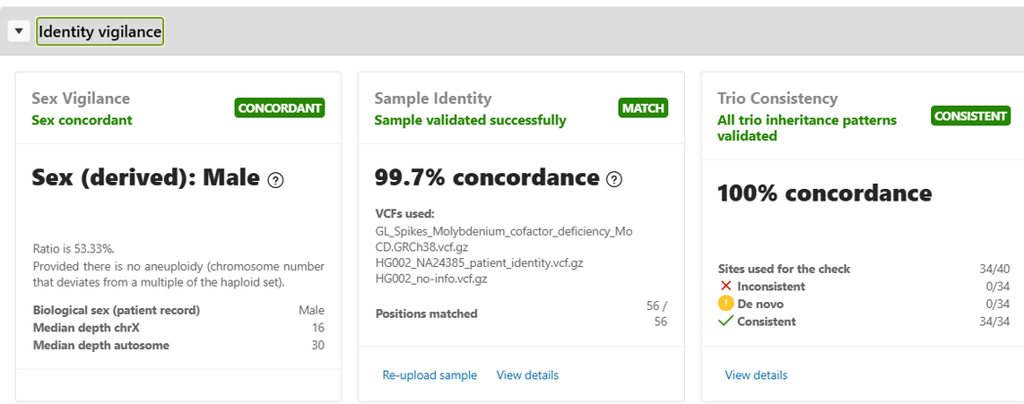
Figure 1. An overview of the Identity Vigilance section showing Sex Vigilance, Sample Identity and Trio Consistency cards
Conclusion
With omnomicsNGS version 2.14, we introduce Identity vigilance to provide an additional safeguard designed to catch sample mix-ups, pedigree mismatches, and sex discordance before variant interpretation begins.
This release also brings improvements to ACMG classification, annotation resources, and overall usability.
Together, these updates support a more reliable and consistent workflow, helping laboratories analyse and interpret genomic data with greater confidence.
For questions about omnomicsNGS v2.14, please contact us at support@euformatics.com.


